How Does a Water Filtration System Actually Work?

Clean water is something most households rely on every day, yet many people rarely think about what flows through their taps. While municipal water treatment removes many harmful contaminants, tap water can still contain chlorine, sediment, heavy metals, minerals, and other impurities that affect taste, smell, and overall water quality.
Water filtration systems improve water quality by removing unwanted contaminants before water is used for drinking, cooking, bathing, or household cleaning. Understanding how these systems work can help homeowners make better decisions when choosing a filtration solution for their household.
Why Water Filtration Matters
Water quality can vary significantly depending on location, water source, and plumbing infrastructure. Even treated mains water may carry substances that affect taste, odor, and appliance performance.
Common water quality concerns include:
- Sediment such as dirt, rust, and sand
- Chlorine and chemical residues
- Heavy metals like lead or copper
- Hard water minerals such as calcium and magnesium
- Bacteria or microorganisms in untreated water
For households using rainwater tanks or bore water, these issues may be even more significant. Poor water quality can affect drinking water and the long-term condition of pipes and household appliances.
The Basic Filtration Process
Most water filtration systems pass water through multiple treatment stages. Each stage targets different contaminants and improves water quality in a specific way.
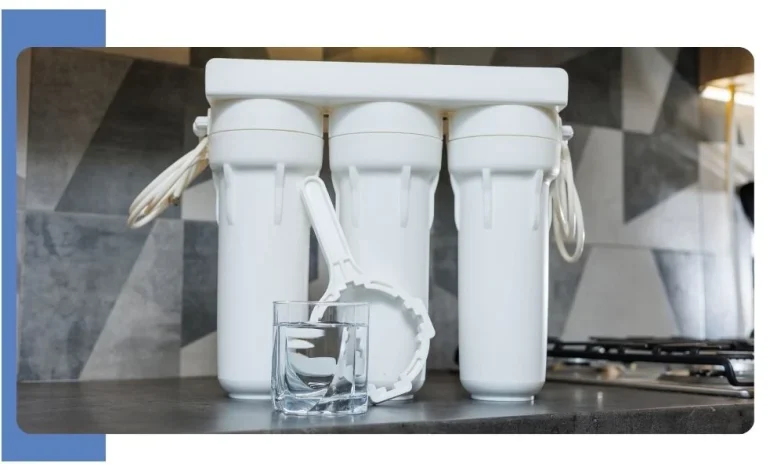
The first stage usually involves sediment filtration. This removes larger particles such as dirt, sand, and rust before they can reach finer filtration components. By removing these particles early, the system operates more efficiently, and other filters last longer.
The next stage commonly uses activated carbon filtration. Carbon filters absorb chemicals and compounds that affect taste and smell. This stage effectively reduces chlorine and odors, so many homeowners notice immediate improvements in drinking water quality.
More advanced systems may include reverse osmosis filtration. These push water through a specialised membrane that removes smaller contaminants, including dissolved salts, heavy metals, and microscopic impurities. Reverse osmosis offers high-level purification but may require more maintenance than standard systems.
For untreated water sources, some systems also include UV disinfection. Ultraviolet filtration uses light to neutralise bacteria, viruses, and microorganisms without adding chemicals to the water.
Different Types of Water Filtration Systems
Not all filtration systems serve the same purpose. The right system depends on your household’s needs and water contaminants.
Under-sink filtration systems are commonly used for drinking and cooking water. They suit households wanting filtered water at a single tap without a whole-home solution.
Whole-house filtration systems install at the main water supply. They filter water before it reaches taps, showers, and appliances, offering broader protection throughout the home.
Reverse osmosis systems are often chosen by homeowners who want a higher level of purification, especially when dissolved contaminants are a concern.
How Do You Know Which System You Need?
Choosing the right water filtration system starts with understanding your water quality. Many homeowners choose a filter based only on price or product marketing without identifying the real issue.
Water testing can identify whether your household is dealing with sediment, chlorine, heavy metals, water hardness, or bacterial contamination. Once you understand the problem, choosing the right filtration solution becomes much easier.
If you are comparing available options, this guide on How to Choose A Water Filter For Home Use can help you match the right system to your household’s needs.
Benefits of Installing a Water Filtration System
Installing a properly selected filtration system provides several long-term benefits. Many homeowners notice immediate improvements in water taste and odour, while others gain confidence in the water they use daily.
Key benefits often include:
These benefits make filtration a practical investment for health and home maintenance.
Conclusion
Water filtration systems remove contaminants through multiple stages, each targeting specific impurities that affect water quality. From sediment removal to advanced purification, these systems provide cleaner and safer water for everyday use.
Understanding how filtration works makes it easier to choose the right system. Whether your goal is better-tasting drinking water or whole-home protection, the right solution delivers long-term benefits for your family and property.