
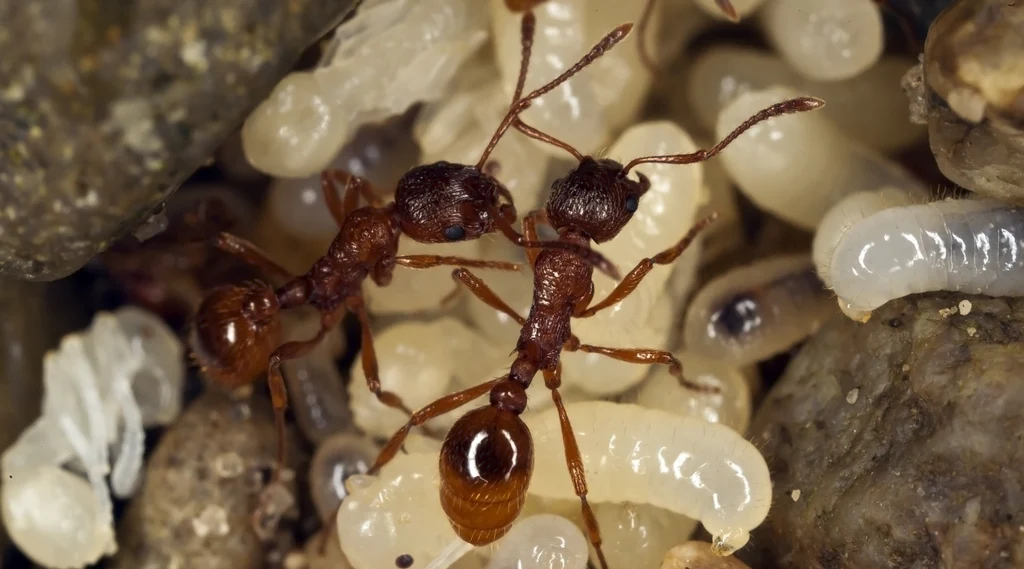
Fire ants may seem like a warm-weather problem. However, they can remain active even during the coldest months of the year. But winter in Glen Ellyn can change how fire ants behave and where they gather. Snow and freezing air limit surface ant activity, but these ants rely on survival tactics that keep colonies alive until spring. That is why Pointe Pest Control technicians have to handle a fire ant issue. These experts are aware of how fire ants work and where they can be found in homes. They know which treatment approach to use to reduce the risk of people being exposed to chemicals.
How Fire Ants Survive the Cold Weather
Fire ants adjust their behavior to handle cold conditions. Their colonies move deeper into the soil where there is consistent warmth as temperatures drop. They create underground chambers to protect the queen and workers from freezing air. Fire ants use soil as insulation.
What Happens Inside the Colony
Fire ant activity continues in the winter. Workers reduce their foraging activity but focus on colony care. The queen remains protected at the center, where temperatures remain stable. In addition, egg production slows during colder months. Larvae development also takes more time. This pause helps conserve energy and resources until conditions improve.
Why Fire Ants Build Deeper Mounds
Fire ants may modify their mounds in fall. Their mounds can become flatter or wider before winter arrives. These changes help capture sunlight and direct warmth downward. Ants retreat below the mound surface as winter approaches. From there, they adjust depth based on temperature shifts.
Fire Ants Beneath Snow Cover
A layer of snow can be a blanket for ants as it traps heat in the soil below. This insulation prevents extreme cold from reaching underground nests. Because of this effect, fire ants may survive winters that can be harsh to people.
Fire Ants and Indoor Spaces
Cold weather can push fire ants closer to structures. Heat that escapes from homes warms nearby soil, which draws ants toward foundations. Full indoor infestations remain less common during winter, but ant sightings near entry points may increase. Ants search for warmth and moisture during this time.
How Winter Affects Fire Ant Bites
Fire ants may still sting if disturbed on a mild day. People expect fewer pests in winter, but they can accidentally come across these tiny creatures in garden beds, wood piles, and mulch near homes. Thus, people who have to work outdoors during cooler months must wear gloves and take caution.
What Winter Means for Colony Size
Winter acts as a test of strength for fire ants. Weaker colonies may fail during prolonged cold periods, while stronger ones survive with little loss. By spring, surviving colonies can quickly expand.
Why Spring Brings Sudden Fire Ant Activity
Fire ants resume normal behavior as soil warms. They return to foraging activity and repair their mounds. Also, they increase their reproduction rate. Colonies that stayed hidden during winter can appear active and widespread. Early spring warmth in Glen Ellyn can trigger rapid surface activity.
Why Winter Is a Key Time for Prevention
Winter can be a perfect time to limit future fire ant problems. Reduced activity makes colonies easier to target with certain control methods. Homeowners can reduce their home’s appeal to ants if they seal possible entry points and manage moisture.
Fire ants adapt well to Glen Ellyn winters through depth, insulation, and reduced activity. Though hidden, they remain present and ready to rebound once warmth returns. People who understand these ants’ winter behavior can stay alert during a season that other people may believe to be free of pests.
